A letter arrives on Tuesday from a law firm in Munich you have never heard of. It references the Barrierefreiheitsstärkungsgesetz — the German transposition of the European Accessibility Act — and cites three specific WCAG 2.1 AA violations on your online store. You have two weeks to respond. Your store ships to Germany. You never thought you needed to comply with German law.
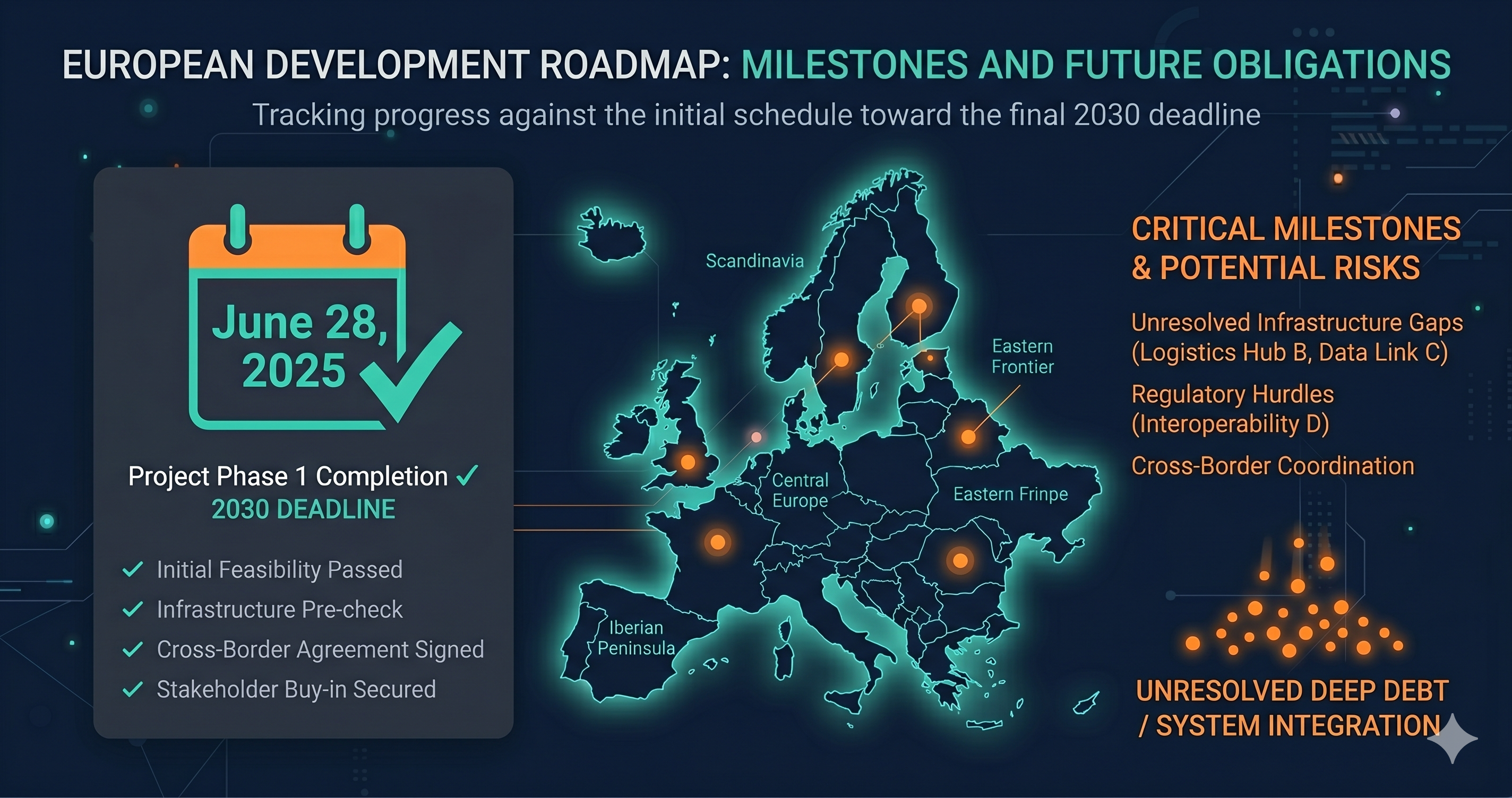
This scenario has been playing out across Europe since August 2025. The European Accessibility Act entered full enforcement on June 28, 2025, and the first EAA compliance actions followed within weeks. The year 2026 is when enforcement activity is accelerating, audits are expanding, and businesses that ignored the June 2025 deadline are discovering the cost of that decision.
For the full technical requirements, deadlines, and country-by-country breakdown, see our EAA compliance guide.
What the European Accessibility Act Actually Requires
The EAA (EU Directive 2019/882) is the world's largest harmonised digital accessibility law. Unlike its predecessor requirements that applied mainly to public sector bodies, the EAA covers private companies across all 27 EU member states. Compliance is not optional for businesses selling to EU consumers — and it applies regardless of where your company is based.
A US Shopify merchant shipping products to Germany must comply. A UK SaaS company with French subscribers must comply. An Australian e-commerce store accepting orders from Spanish customers must comply. Geographic location of your business is irrelevant; what matters is whether EU consumers can access your digital products and services.
The required compliance standard is EN 301 549, which incorporates WCAG 2.1 Level AA. That's the same technical standard US courts treat as the de facto ADA compliance benchmark (there's no DOJ rule requiring it of private businesses — only the government-site Title II rule is a formal DOJ mandate), meaning the WCAG violations that expose you to US demand letters are the same violations that expose you to EAA enforcement in Europe.
Products and services in scope include e-commerce websites and apps, online banking and financial services, digital media platforms, ticketing and booking systems, and electronic communications. If EU consumers interact with it digitally, it is in scope.
What Enforcement Looks Like in 2026
No formal EAA fines have been publicly announced as of May 2026, but "no fines yet" does not mean enforcement is inactive. According to Taylor Wessing's March 2026 EAA compliance analysis, six months after the law became applicable, multiple enforcement tracks are already running across member states.
Germany saw the first wave of private Abmahnungen — formal warning letters — in August 2025, just weeks after the BFSG (Germany's EAA transposition) took effect. Under German law, competitors and disability associations can send these letters directly, without waiting for a government regulator. A competitor in your market can sue you for accessibility violations and recover legal costs. This is not theoretical: German e-commerce operators began receiving Abmahnungen within weeks of the law's enforcement date.
France issued formal notices to four major retailers — including Carrefour, Auchan, and Leclerc — in late 2025 after a disability association initiated proceedings for inaccessible e-commerce platforms. As of April 2026, those cases are pending in court.
The Netherlands allowed companies to self-report non-conformance until October 15, 2025. The Dutch Authority for Consumers and Markets (ACM) is now conducting active audits and investigations. The Netherlands has the highest EAA penalty structure in Europe.
Sweden began its first formal reviews of e-commerce companies in October 2025, focusing specifically on homepage accessibility, product page structure, and search function compliance.
EAA Fines by Country: What You Are Actually Risking
| Country | Maximum Fine | Enforcement Agency | Current Status (May 2026) |
|---|---|---|---|
| Netherlands | €900,000 or 1–10% of annual turnover | ACM | Active audits underway |
| Spain | €1,000,000 (very serious violations) | AEPD + sector regulators | Immediate penalties, no warning period |
| Germany | €100,000 per individual violation | Bundesnetzagentur + private Abmahnungen | Private warning letters active since Aug 2025 |
| France | €250,000 (repeat violations) | ARCOM, DGCCRF | Formal notices issued to major retailers |
| Sweden | €1,000,000+ (serious violations) | PTS | First e-commerce reviews underway |
| Italy | Up to 5% of annual revenue | AgID | 90-day cure period applies |
| Belgium | €50,000 – €200,000 | Sector regulators | Transposition active |
These are not future projections. Every country in the table above has transposed the EAA into national law and has an active enforcement body. The question for businesses serving EU markets is not whether enforcement will happen — it is whether enforcement happens to them first, or to their competitors first.
Why 2026 Is Different from 2025
When the June 2025 deadline arrived, many businesses took a wait-and-see position. No fines had been issued. No court decisions had been published. The attitude was understandable: the law was new, enforcement agencies were still ramping up, and public guidance was limited.
That window closed in late 2025. Germany's Abmahnungen system activated immediately and created private enforcement risk that does not wait for government action. France's retailers received formal notices. The Netherlands started audits. Sweden began formal reviews.
2026 is the year enforcement infrastructure is fully operational. Businesses that still lack EAA compliance are no longer ahead of enforcement — they are behind it. And under the EAA's structure, existing products have until June 28, 2030 to achieve full compliance, but new products and services launched after June 28, 2025, must comply immediately.
This also matters for US businesses: ADA compliance using WCAG 2.1 AA satisfies the technical standard required by the EAA. A single audit program covering both frameworks protects against legal exposure in both jurisdictions simultaneously.
The Gap Between "We Have an Accessibility Statement" and Actual Compliance
Many businesses responded to the EAA deadline by publishing an accessibility statement on their website. An accessibility statement is required under the EAA — but it is not the same as being compliant. Publishing a statement that says "we are working toward WCAG 2.1 AA compliance" while operating a non-compliant site does not create a legal safe harbor. In some cases, enforcement notices have cited the gap between a published statement and actual site behavior as evidence of non-compliance.
EAA compliance requires your digital products to actually meet WCAG 2.1 AA criteria, which means evaluating your live, rendered DOM — not running a static HTML check and calling it done. ADAGuard's EAA compliance scan evaluates your site with full JavaScript rendering, covering 50+ WCAG criteria including all of the Level AA requirements referenced by EN 301 549. It also covers Section 508, giving US-based businesses a single scan that addresses both US and EU obligations.
You can run a free EAA compliance check at adaguard.io — no account required. The scan identifies which specific WCAG criteria are failing on your live site and which WCAG criterion numbers to give your development team for remediation.
What to Do Before Your Next EU Shipment
If your store serves EU customers, EAA compliance is not optional and it is not a future problem. The enforcement timelines above reflect activity that is already underway. The practical steps:
Scan first — run a live DOM scan to understand your actual WCAG 2.1 AA compliance status. Not a Lighthouse score. Not a browser extension. A full-rendering scan that sees what your EU customers and EU enforcement bodies see.
Prioritize critical violations — keyboard traps, missing alt text, unlabeled form elements, and focus management failures are the categories most frequently cited in early enforcement activity.
Document remediation — for any violations that take time to fix, documented remediation plans with timelines demonstrate good-faith compliance effort. Enforcement agencies in most EAA jurisdictions have expressed preference for achieving compliance over punishing non-compliance — but documented inaction is a different matter.
The 30-Second Fix
The EAA entered enforcement in June 2025. Germany is already issuing warning letters. France has served formal notices on major retailers. The Netherlands is running active audits. Run a free EAA compliance scan at adaguard.io — paste your URL and get your WCAG 2.1 AA compliance score against the full EN 301 549 standard in under 60 seconds. One scan. Two jurisdictions. No account required.