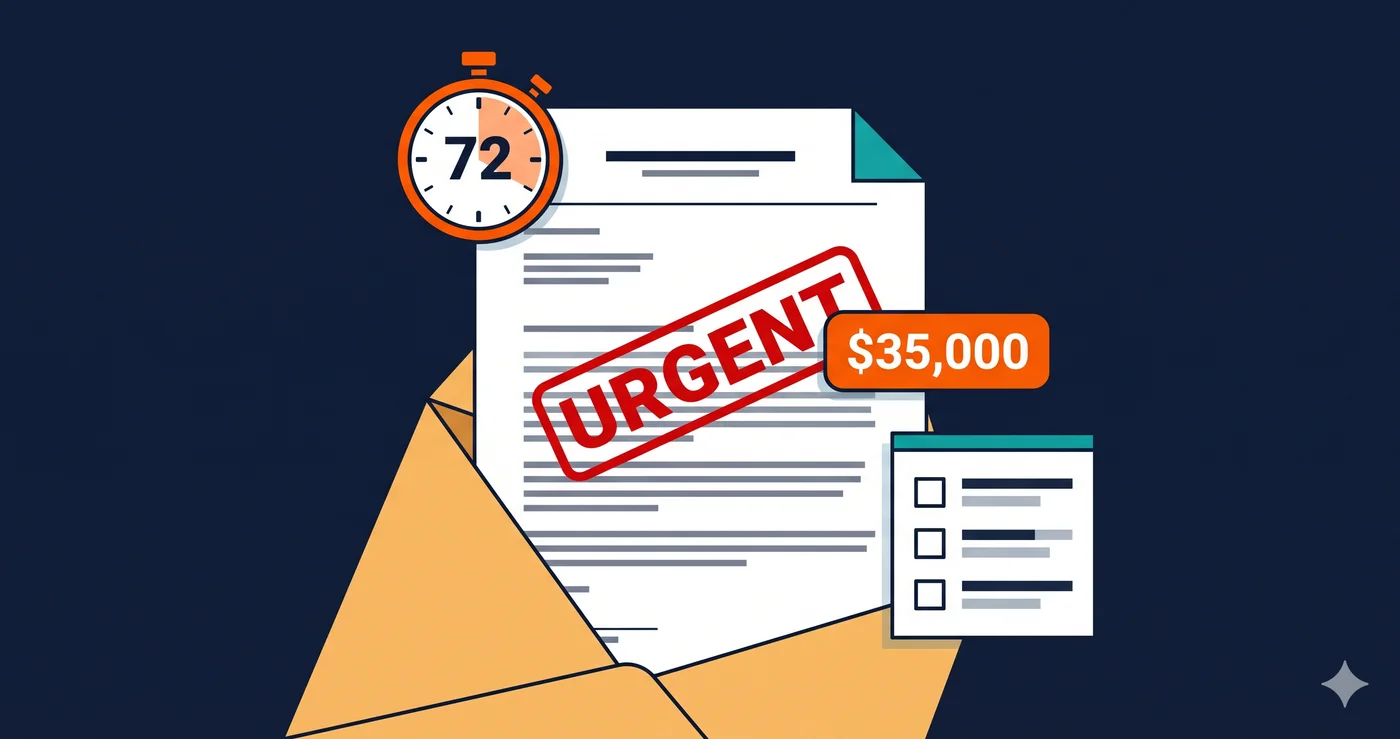
On July 8, 2025 — ten days after the European Accessibility Act entered full enforcement — disability rights organisations in France served formal legal notices on four of the country's largest grocery retailers: Auchan, Carrefour, E. Leclerc, and Picard Surgelés. The notices cited multiple failures under WCAG 2.1 AA standards and gave the retailers until September 1, 2025 to make their online grocery services fully accessible to people with disabilities.
When September 1 passed without satisfactory remediation, the cases escalated. On November 12, 2025, organisations ApiDV and Droit Pluriel — supported by the legal collective Intérêt à Agir — filed emergency injunctions against all four retailers in French courts. This was the first wave of EAA-based litigation in Europe, and it is still active.
See our EAA compliance guide for the technical requirements these notices are based on.
What the Notices Actually Cited
The violations described in the formal notices reflect exactly the accessibility failures that automated scanners consistently find across major e-commerce sites:
- Websites and apps that could not be used with screen readers
- Checkout processes inaccessible to keyboard-only users
- Product information unavailable to users with visual impairments
- Inaccessible account management and loyalty programme features
These are not exotic compliance failures. They are the most common WCAG 2.1 AA deficiencies found on e-commerce sites globally — the same failures appearing in US ADA demand letters, German Abmahnungen, and accessibility audits across every major market. Carrefour, Auchan, and Leclerc are large, sophisticated businesses with dedicated IT teams. Yet their sites failed the basic WCAG criteria that any accessibility scanner can detect.
The France EAA Enforcement Timeline
Understanding the sequence matters, because it illustrates how quickly EAA enforcement can escalate from notice to injunction:
| Date | Event |
|---|
| June 28, 2025 | EAA enters full enforcement across EU |
| July 8, 2025 | Formal legal notices served on Auchan, Carrefour, E. Leclerc, Picard |
| September 1, 2025 | Remediation deadline given in notices |
| November 12, 2025 | Emergency injunctions filed by ApiDV and Droit Pluriel |
| May 2026 | Cases pending; no court ruling or fine issued yet |
| June 28, 2030 | All existing EU products/services must comply (full EAA deadline) |
Ten days from enforcement date to formal legal action. Less than five months from notice to emergency injunction. This is a pace of escalation that most compliance teams are not structured to respond to — especially when they haven't yet identified what violations their site carries.
France's EAA Fine Structure
France's enforcement authority is spread across multiple agencies — ARCOM (Autorité de Régulation de la Communication Audiovisuelle et Numérique), ARCEP, and DGCCRF — depending on sector. The fine structure under France's EAA transposition:
| Violation Category | Fine Range | Notes |
|---|
| Per-violation base fine (legal entities) | €7,500 | Applied per individual violation |
| Repeat violations (continued non-compliance) | Up to €250,000 | Applied after warning period |
| Systematic / very serious | Sector-specific | ARCOM can impose additional penalties |
| Injunction non-compliance | Court-set penalties | Daily penalties for failure to comply with injunctions |
For a site with 50 distinct WCAG violations — a low estimate for a major e-commerce platform — the per-violation base exposure is €375,000 before reaching the repeat violation threshold. Emergency injunctions, if upheld, add daily penalty exposure for continued non-compliance.
The November 2025 filings represent something more significant than the fine amounts: they establish a legal precedent for EAA enforcement in civil courts, independent of regulatory agency action. If French courts uphold the injunctions, disability rights organisations across the EU have a proven model for bringing parallel actions in their own jurisdictions.
Why Major Retailers Got Caught
The practical question is why Carrefour, Auchan, and Leclerc — companies with significant legal and technology resources — launched into the EAA enforcement era with sites that failed multiple WCAG 2.1 AA criteria.
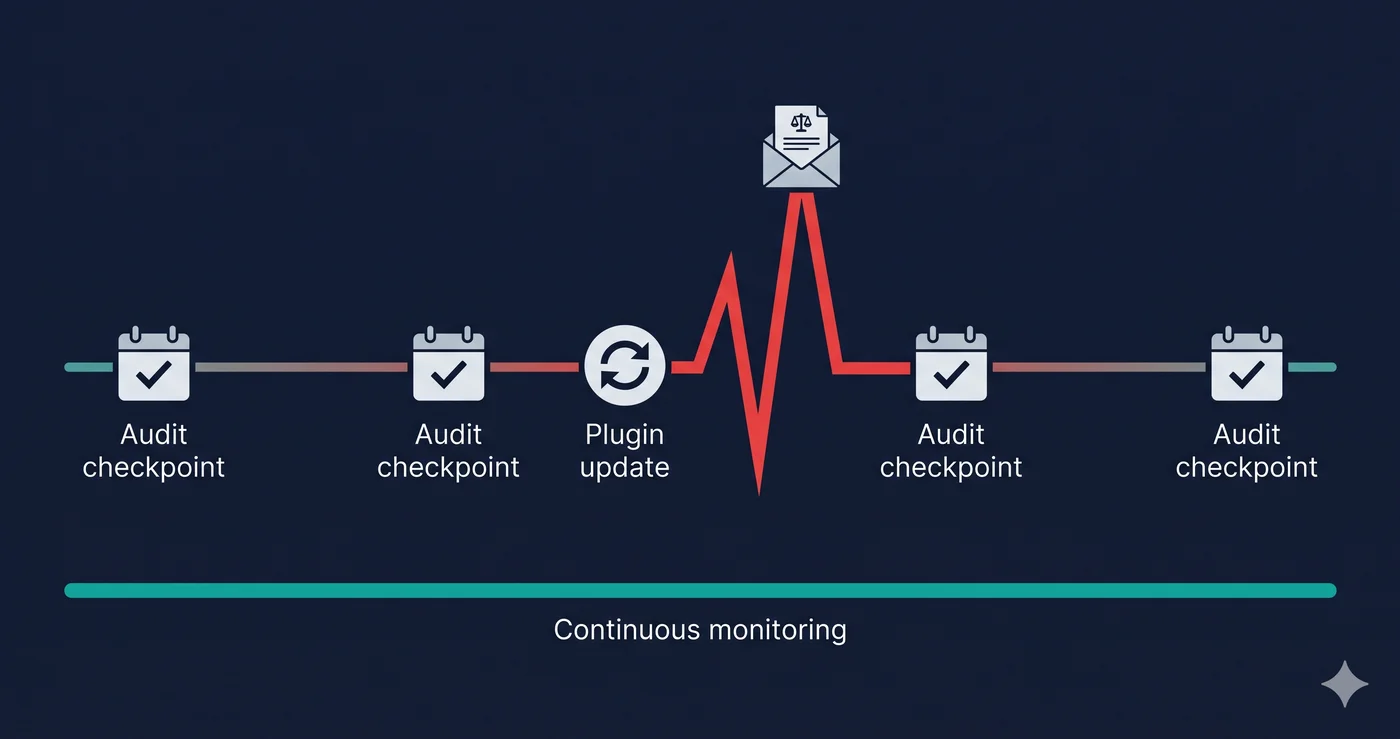
The most likely explanation is a common failure mode in enterprise accessibility: static scanner dependency. Enterprise IT teams routinely use Lighthouse, Chrome DevTools, or basic automated tools as their accessibility check. These tools evaluate a limited set of WCAG criteria against static HTML, miss JavaScript-rendered interactive elements, and cannot evaluate authenticated flows.
E-commerce checkout experiences — the specific area cited in the EAA notices — are almost entirely JavaScript-rendered. Address forms, payment overlays, product quantity selectors, and checkout modals do not exist in the static page source. They are rendered dynamically. A Lighthouse audit of an e-commerce checkout page returns accessibility scores primarily based on the page shell, not the dynamic checkout experience that an actual customer — and a screen reader user — encounters.
A static scan that shows 85% accessibility compliance can coexist with a checkout flow that is entirely unusable with a screen reader. That is the gap that formal notices and emergency injunctions are now exposing.
What "In Scope" for EAA Means for E-Commerce
The violations cited in the French enforcement actions are from the core EAA in-scope category: e-commerce websites and mobile apps providing products and services to EU consumers. For any business in this category, the following experiences must meet WCAG 2.1 AA standards:
| In-Scope Experience | Common Violations Found |
|---|
| Product pages | Missing alt text, low contrast, inaccessible filtering |
| Cart and checkout flow | Keyboard-inaccessible inputs, missing form labels, focus traps |
| Account portal / login | Inaccessible CAPTCHA, missing error descriptions, keyboard traps |
| Search and filtering | ARIA missing on dynamic results, inaccessible sort controls |
| Customer support/chat | Chat widget not keyboard-accessible, no screen reader labels |
| Mobile app | Unlabelled buttons, inaccessible navigation, contrast failures |
Every item in this table can be identified by a live-DOM scanner. None of them are detectable by a static page analysis tool.
The 4,800+ US Lawsuits Parallel
In 2025, 4,800+ ADA web accessibility lawsuits were filed in the United States — a significant year-over-year increase according to UsableNet. The US enforcement model is plaintiff-driven and private; the EU model is regulatory-agency and disability-organisation driven. But the outcome for a business caught in either system is similar: legal costs, remediation pressure, reputational exposure, and time-consuming proceedings.
The French enforcement cases are widely described in the legal community as the template for systematic EAA enforcement across EU member states. What disability organisations proved they could do to Carrefour and Leclerc in France, parallel organisations in Germany, Spain, Italy, and the Netherlands are now watching carefully.
In 2025, over 4,800 ADA web lawsuits were filed in the US alone, and the EU trajectory is now starting its own acceleration curve.
ADAGuard Scans What Regulators Are Testing
The violations cited in French EAA enforcement — inaccessible screen reader flows, keyboard-only navigation failures, inaccessible checkout — are precisely the failures that live-DOM scanners find and static scanners miss. ADAGuard evaluates your site's live DOM through 22 custom accessibility checker modules plus axe-core integration, achieving approximately 78% WCAG 2.2 AA automated coverage (43 of 55 criteria).
Critically, ADAGuard supports authenticated scanning: it can scan your logged-in checkout experience, not just your homepage. This is where EAA violations concentrate in e-commerce, and it is precisely where static tools fail to look.
The scan report maps every failure to its WCAG 2.1 AA criterion number — the exact reference format used in formal legal notices, injunction filings, and regulatory correspondence. When ApiDV cited failure of WCAG 2.1 criterion 4.1.2 in their notice to Carrefour, they were citing the same criterion number an ADAGuard scan report would surface.
What to Do When You Find Violations
Violations found in your scan fall into two categories:
Platform/code failures: Missing alt text, contrast failures, keyboard navigation gaps, broken ARIA — these require development remediation. Take the WCAG criterion numbers from your scan report to your development team with specific element references. Prioritise checkout flow, login, and account portal pages first — they are the EAA enforcement focus.
Third-party component failures: Payment overlays, chat widgets, review carousels, popup managers — these require vendor engagement. File support tickets citing specific WCAG criteria. Vendors operating in EU markets face the same EAA exposure and are increasingly responsive to accessibility remediation requests.
Scan first. Prioritise based on your actual violations, on your actual site, in your actual authenticated flows. Generic remediation guidance based on industry averages will not protect you from enforcement action against your specific failures.
The 30-Second Fix
Go to adaguard.io and paste your URL for a free scan. No signup required. The report identifies WCAG 2.1 and 2.2 failures on your live DOM, mapped to criterion numbers, with severity and element-level detail.
Carrefour, Auchan, and Leclerc received their formal notices ten days after the EAA took effect. Your notice, if it comes, will reference specific criterion numbers on specific pages of your site. Find out which ones before they do.